
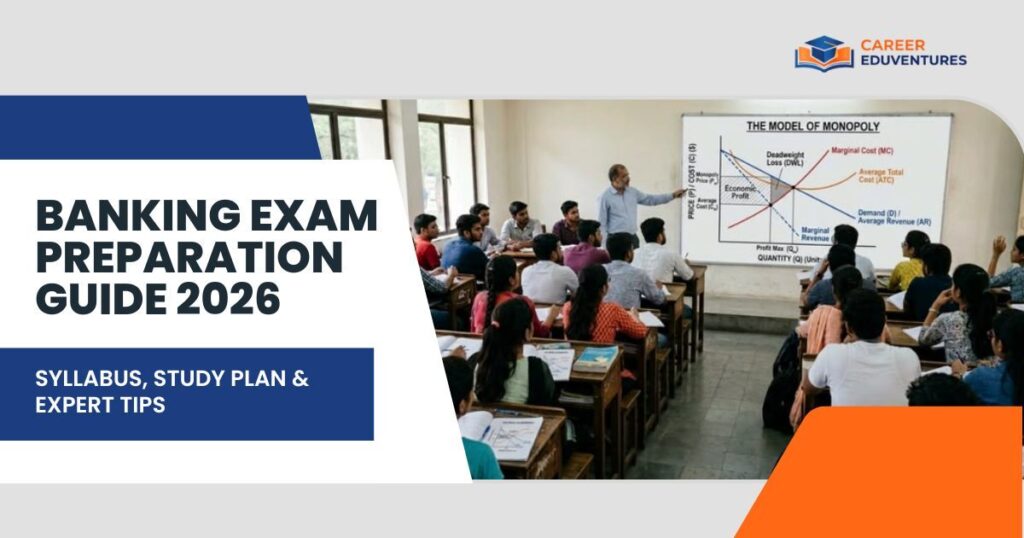
Banking examinations remain one of the most sought-after career pathways for graduates aspiring to secure stable and rewarding jobs in the public sector. Competitive exams conducted by leading banking recruitment bodies assess candidates on aptitude, reasoning, language proficiency and financial awareness. Effective Banking Exam Preparation requires a structured approach rather than relying solely on extensive study hours.
Success depends on understanding the exam pattern, following a disciplined routine, practising consistently and analysing performance regularly. With the right strategy and reliable study resources, aspirants can improve both speed and accuracy while building confidence for the examination.
How to Improve Banking Exam Preparation with a Structured Study Approach
Successful Banking Exam Preparation begins with understanding the exam pattern, mastering core subjects, following a realistic study schedule, solving mock tests regularly and reviewing mistakes consistently. Combining conceptual clarity with timed practice helps candidates maximise accuracy and perform confidently in competitive banking examinations.
Understand the Exam Structure First
Before starting your preparation, familiarise yourself with the selection process for major banking examinations. Although individual recruitment notifications may vary, most exams include preliminary and main stages followed by an interview or personality assessment where applicable.
Understanding the marking scheme, sectional timing and question distribution enables candidates to allocate preparation time more effectively.
Master the Core Subjects
A thorough understanding of the banking exam syllabus forms the foundation of effective preparation. Common sections include Quantitative Aptitude, Reasoning Ability, English Language, General Awareness, Financial Awareness and Computer Knowledge, depending on the specific examination.
Instead of studying topics randomly, divide each subject into manageable sections and track progress systematically. Building strong fundamentals makes advanced practice considerably easier.
Follow a Practical Daily Study Plan
Consistency matters more than occasional long study sessions. A realistic banking study plan should allocate dedicated time to concept learning, practice questions, revision and mock tests each day.
Many successful candidates follow a balanced schedule that combines aptitude practice with current affairs and revision, ensuring every subject receives adequate attention throughout the preparation period.
Build an Effective Preparation Strategy
A successful banking exam strategy focuses equally on accuracy, speed and time management. Begin with conceptual learning before moving to sectional tests and full-length mock examinations.
After every mock test, analyse incorrect answers carefully to identify weak areas. Continuous performance analysis helps improve decision-making under exam conditions and prevents repetitive mistakes.
Choose Reliable Study Resources
Selecting quality study material is more beneficial than collecting multiple reference books. Standard textbooks, previous years’ question papers, official notifications and updated practice resources provide comprehensive preparation.
When choosing banking exam books, prioritise publications that explain concepts clearly, include solved examples and offer sufficient practice questions aligned with the latest examination pattern.
Develop Strong Time Management Skills
Competitive banking examinations require candidates to answer numerous questions within a limited time. Practising under timed conditions improves question selection, reduces hesitation and enhances overall efficiency.
Avoid spending excessive time on difficult questions during practice sessions. Learning when to skip and revisit challenging questions is equally important for maximising scores.
Revise and Practise Consistently
Revision reinforces conceptual understanding and improves long-term retention. Maintain concise notes for formulas, grammar rules, important financial terms and current affairs.
Regular mock tests, sectional quizzes and previous years’ papers provide valuable insight into examination trends while helping candidates develop confidence before the final assessment.
Final Thoughts
Successful Banking Exam Preparation requires disciplined planning, consistent practice and continuous self-evaluation. Understanding the syllabus, following a structured study routine, selecting reliable learning resources, and analysing mock test performance significantly improve your chances of success. Rather than focusing only on study hours, prioritise smart preparation and regular revision. Career Eduventures supports banking aspirants with expert guidance, comprehensive learning resources and structured coaching programmes designed to help candidates prepare confidently for competitive banking examinations.
F.A.Q.
Frequently Asked Questions
The ideal preparation period depends on your existing knowledge and daily availability. Most candidates benefit from three to six months of consistent Banking Exam Preparation, combining conceptual learning, mock tests, revision and performance analysis to build both speed and confidence before the examination.
Most banking examinations assess Quantitative Aptitude, Reasoning Ability, English Language, General Awareness, Financial Awareness and, in some cases, Computer Knowledge. Candidates should always refer to the official recruitment notification for the specific examination because subject weightage and patterns may vary between different banking recruitment bodies.
The most effective bank exam preparation tips include understanding the syllabus thoroughly, following a realistic study timetable, practising previous years’ papers, taking regular mock tests and analysing mistakes carefully. Consistent revision and maintaining accuracy alongside speed are equally important for improving examination performance.
Choose study materials from reputable publishers that comprehensively cover aptitude, reasoning, English, current affairs and banking awareness. Previous years’ question papers, mock test series and concept-based practice books generally provide better preparation than relying solely on multiple guidebooks or online summaries.
A well-planned banking exam strategy helps candidates manage time efficiently, prioritise easier questions, minimise negative marking and maintain accuracy under pressure. Combined with regular mock test analysis and revision, it significantly enhances overall performance and improves the likelihood of qualifying for successive examination stages.